Website adviceBusiness websites
Does your business still need a website in 2026?
Do contractors need a website? Compare referrals, Google and a small business site, then decide what to build and how to measure useful inquiries.


The short answer
Does your business still need a website in 2026?
Most contractors need a website once they want customers beyond their immediate referral network. A useful site explains the work you do, shows evidence and gives people a reliable way to contact you. It can start as one page. A full diary may justify delaying a large build, but not ignoring inaccurate information online.
What to remember
- Start with a small site that answers real customer questions.
- Keep your Google Business Profile and website consistent.
- Spend on working inquiries before expensive effects.
My recommendation: For most established local businesses, keep an owned website and an accurate business profile. Use social channels to support them rather than making one social account your only contact destination.
- Start with a small site that answers real customer questions.
- Keep your Google Business Profile and website consistent.
- Spend on working inquiries before expensive effects.
- Judge the site by suitable inquiries and booked work, not visits alone.
If your phone already rings, a website can feel like another job to maintain. That is a fair concern. The right question is what your business needs next: more inquiries, different jobs, stronger reassurance after a referral, or simply a dependable place to send people.
From my web development work: While reviewing the Google Maps import in Website Generator Hub, I encountered a link that could match more than one business. A recognizable listing link was not enough to identify the intended business reliably. Keep your website’s business name, phone and address explicit, and check imported details before publishing.
When does a contractor website earn its place?
A website earns its place when it removes uncertainty that would otherwise stop a suitable customer contacting you. That uncertainty might be whether you cover their town, handle their roofing material or accept small repairs.
Imagine a homeowner receives your name from a neighbor. This is an illustrative situation, not a customer case study. The homeowner searches for your business and finds a social page last updated two years ago. Your business may be excellent, but the person still has to work out whether you are trading and what to do next.
A concise page with current photographs, clear services and a working phone link answers those questions. It also helps a person compare an urgent repair with a planned replacement without expecting you to answer the same introductory questions every evening.
A website is particularly useful when you want more of one job type. If your team is moving toward commercial maintenance, a page devoted to commercial work can explain the process, access requirements and scope. That is a more precise message than a social feed mixing old residential jobs with general announcements.
Do not expect publishing alone to create demand. A website still needs a route to visitors: referrals, your business listing, useful search content, local partnerships or advertising. Treat it as a working part of your business, with an owner responsible for updates and inquiries.
How quickly do local customers decide?
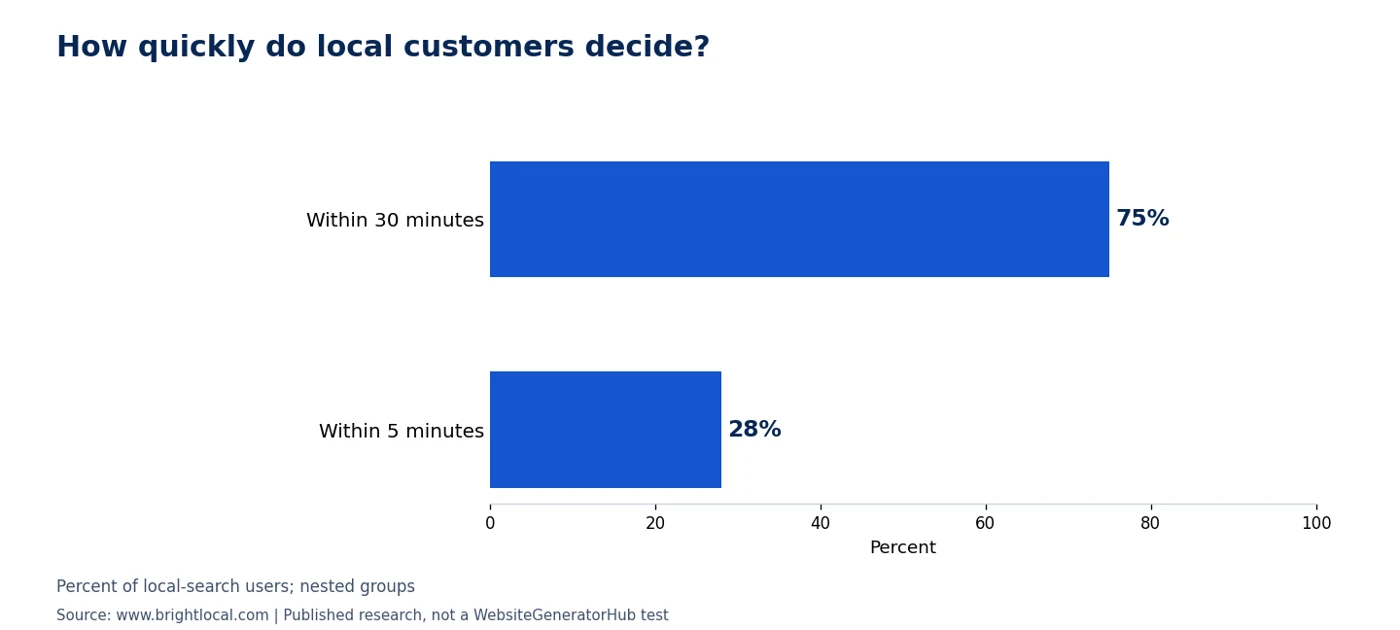
BrightLocal’s June 2026 study of 1,227 US local-search users found 75% chose a business within 30 minutes and 28% within five minutes. Trades and home repairs were among the slower categories. Help visitors find the facts quickly without treating these broad figures as a deadline for every roofing purchase. Source: BrightLocal Consumer Search Behavior: Speed, 2026.
Can you keep using referrals and a Google profile?
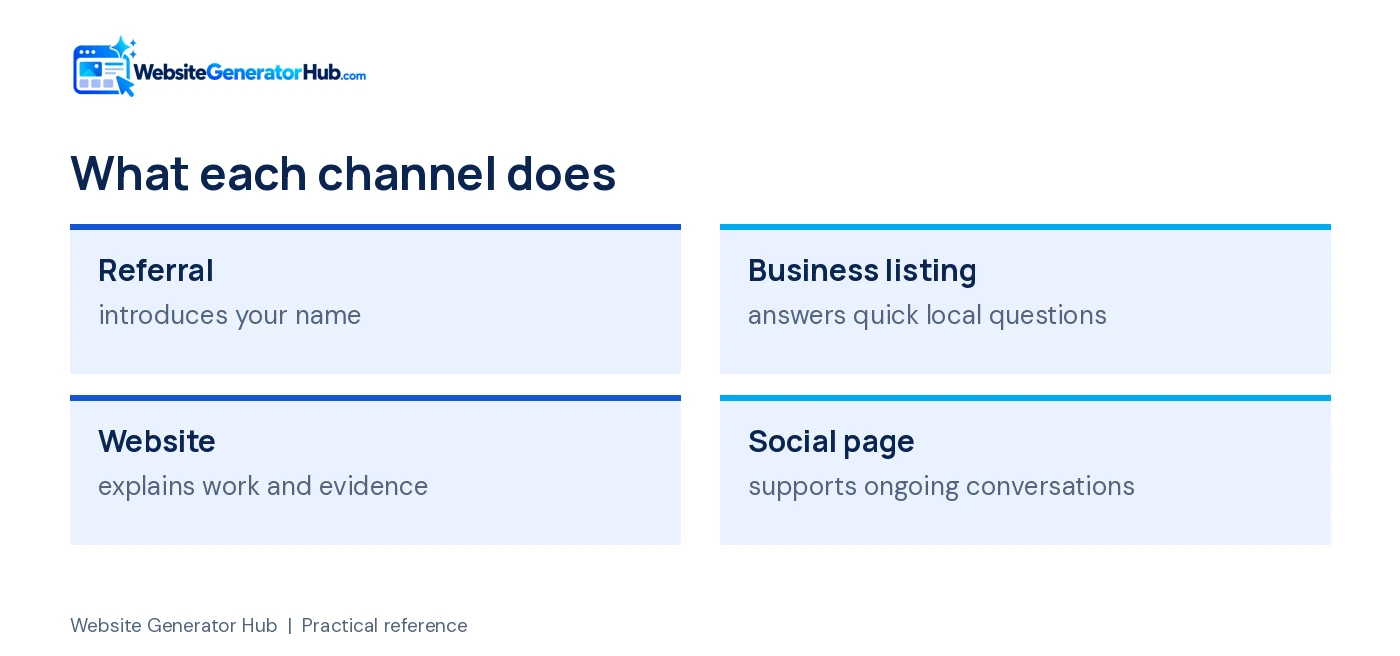
Yes. A business with enough suitable referral work can continue with a small online presence while it decides what to build. You do not need a large website to prove that you run a legitimate business.
Google allows eligible businesses to add or claim a Business Profile without a fee. The profile can answer immediate local questions through your category, phone number and hours. It is useful even before you have a domain.
However, a listing gives you less room to explain a complicated job. Someone comparing flat-roof systems, commercial maintenance or replacement options may need photographs and detailed explanations that work better on your own site.
Google's local-ranking guidance identifies relevance, distance and prominence as core factors. Buying a website does not buy a better position in Maps. Accurate profile information and a useful website play different roles, and neither removes the effect of distance.
Keep a simple contact destination even when you are fully booked. State the jobs you accept and realistic availability. If you are taking a break from new inquiries, say so clearly instead of leaving a broken form or an unmonitored inbox.
| Your situation | Sensible starting point | What to avoid |
|---|---|---|
| Fully booked through referrals | Accurate listing and a concise credibility page | Paying for lead volume you cannot handle |
| New business with limited evidence | Small site with real services and your own photographs | Invented reviews or years of experience |
| Established company seeking larger jobs | Clear service information and relevant project examples | A gallery with no explanation of the work |
| Several locations or complex bookings | Planned content structure and suitable booking tools | Forcing every process into one contact form |
What must a small contractor website contain?
A first website should make the business, services and next action obvious. Build the page around questions a real customer asks before calling.
- State the business name and main work in the opening headline.
- Explain the places you actually serve in plain language.
- Use photographs of work you have permission to show.
- Describe the steps from inquiry to quote and completion.
- Add verifiable reviews or other evidence of your work.
- Display the phone, email and normal opening hours.
- Test the contact form from a phone and confirm delivery.
For a roofer, the distinction between repair and replacement matters more than a dramatic slogan. For an HVAC business, visitors may need to know whether you service boilers, furnaces, heat pumps or air conditioners. A clear service list prevents the wrong inquiries as well as attracting the right ones.
Keep evidence specific. A project caption can explain the material, general location and work completed without publishing a customer's home address. An authentic photograph with a useful caption is more valuable than a row of unverified badges.
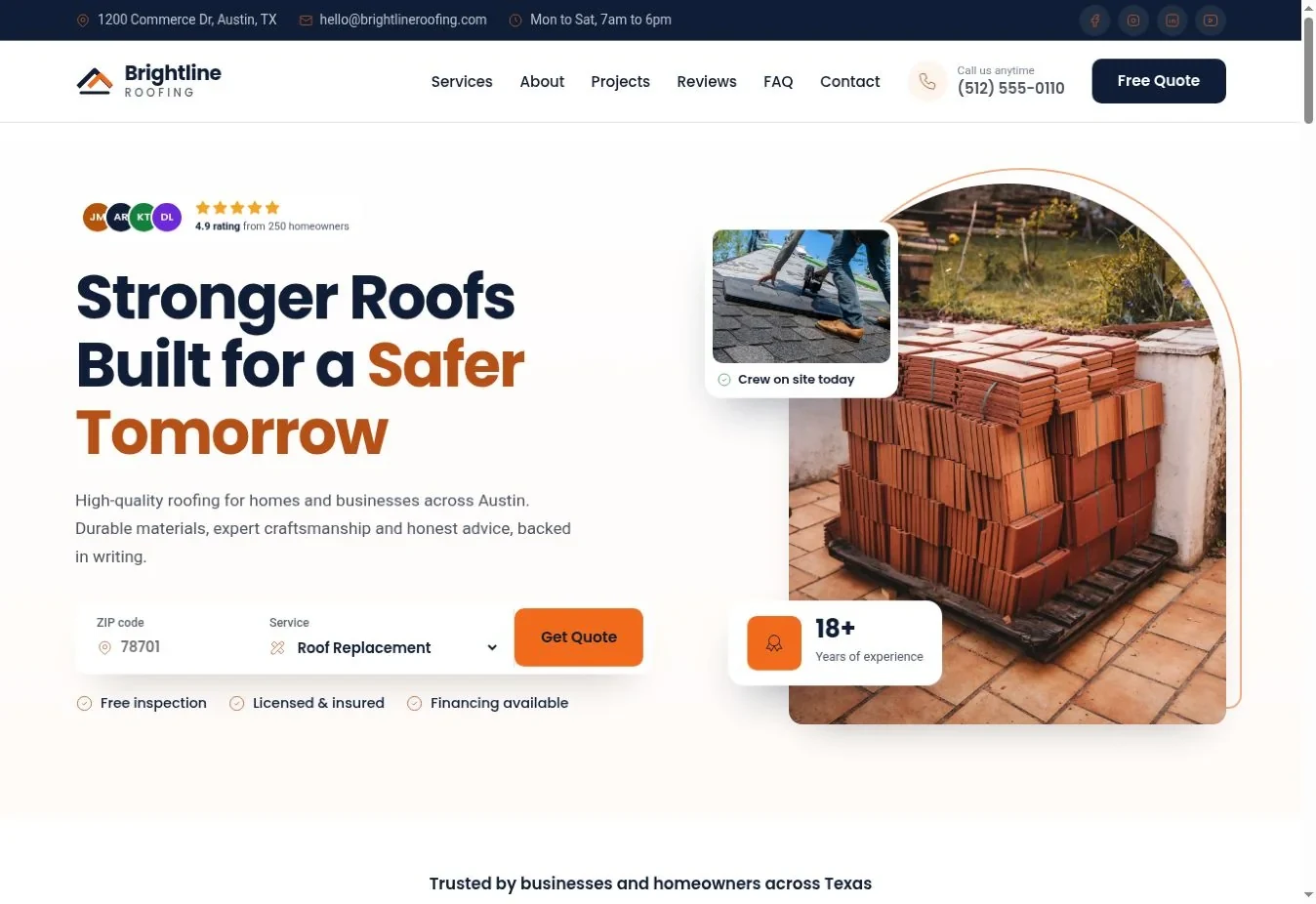
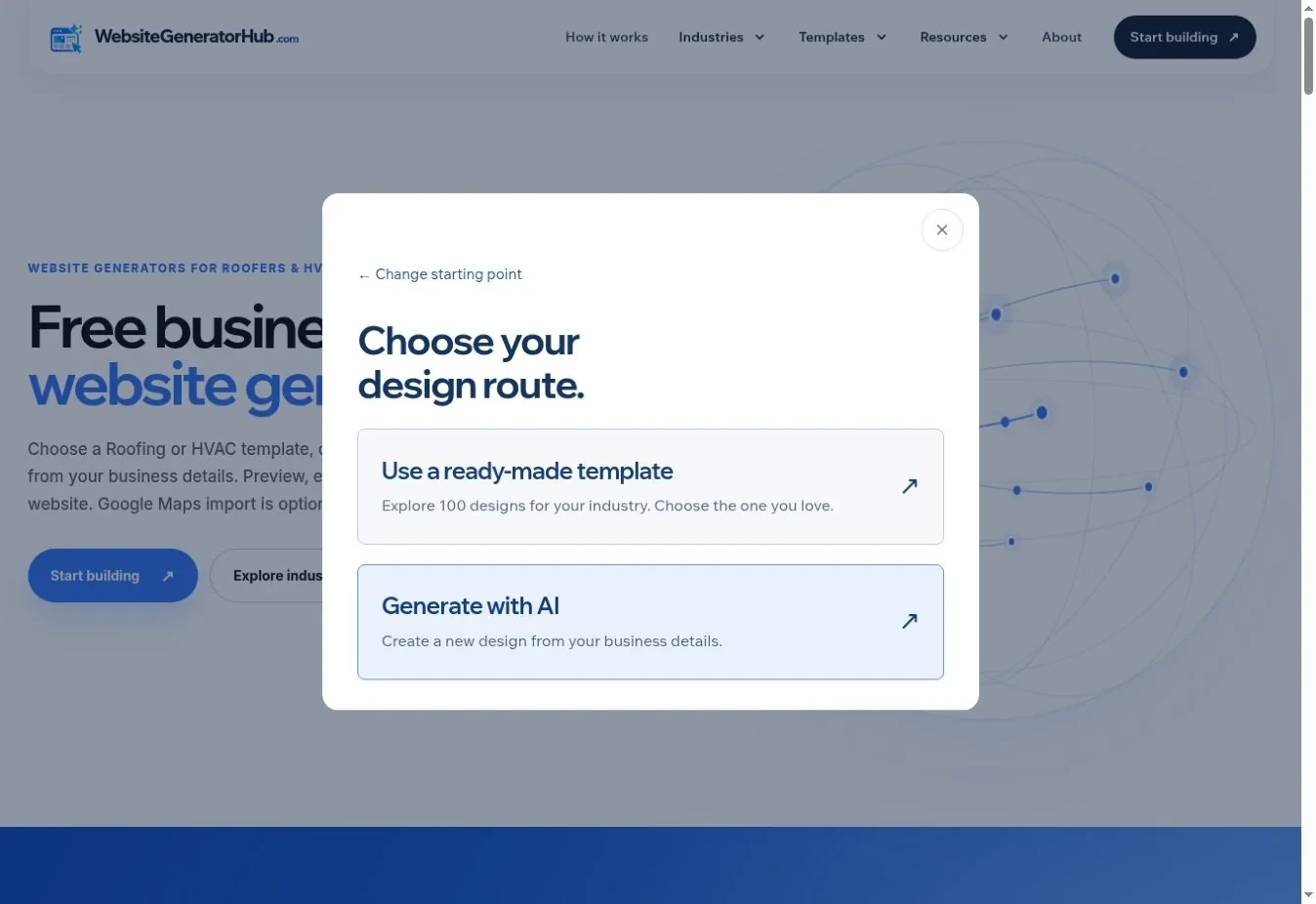
If you are choosing the layout now, the roofing website generator and HVAC website generator provide trade-specific starting points. The free website creation guide explains what to check before downloading.
How much should you build before spending more?
Build enough to support your current sales process, then add features in response to a specific need. A site with a functioning phone link and honest evidence is a better starting point than an unfinished large project.
List the inquiries you want. For example, a roof-repair business may need callers to give their town, roof type and description of the problem. It probably does not need customer accounts, a quotation calculator and an elaborate booking workflow on day one.
Then list what has to happen after submission. Who checks the inbox? How are missed calls returned? Is someone available outside normal hours? A website cannot solve these operational questions on its own.
Set a budget that includes the domain, hosting and maintenance as well as design. Check whether a builder's quoted monthly price requires annual or multi-year payment. Ask who owns the account and whether the site can move if your needs change. Our roofing website cost guide separates these costs.
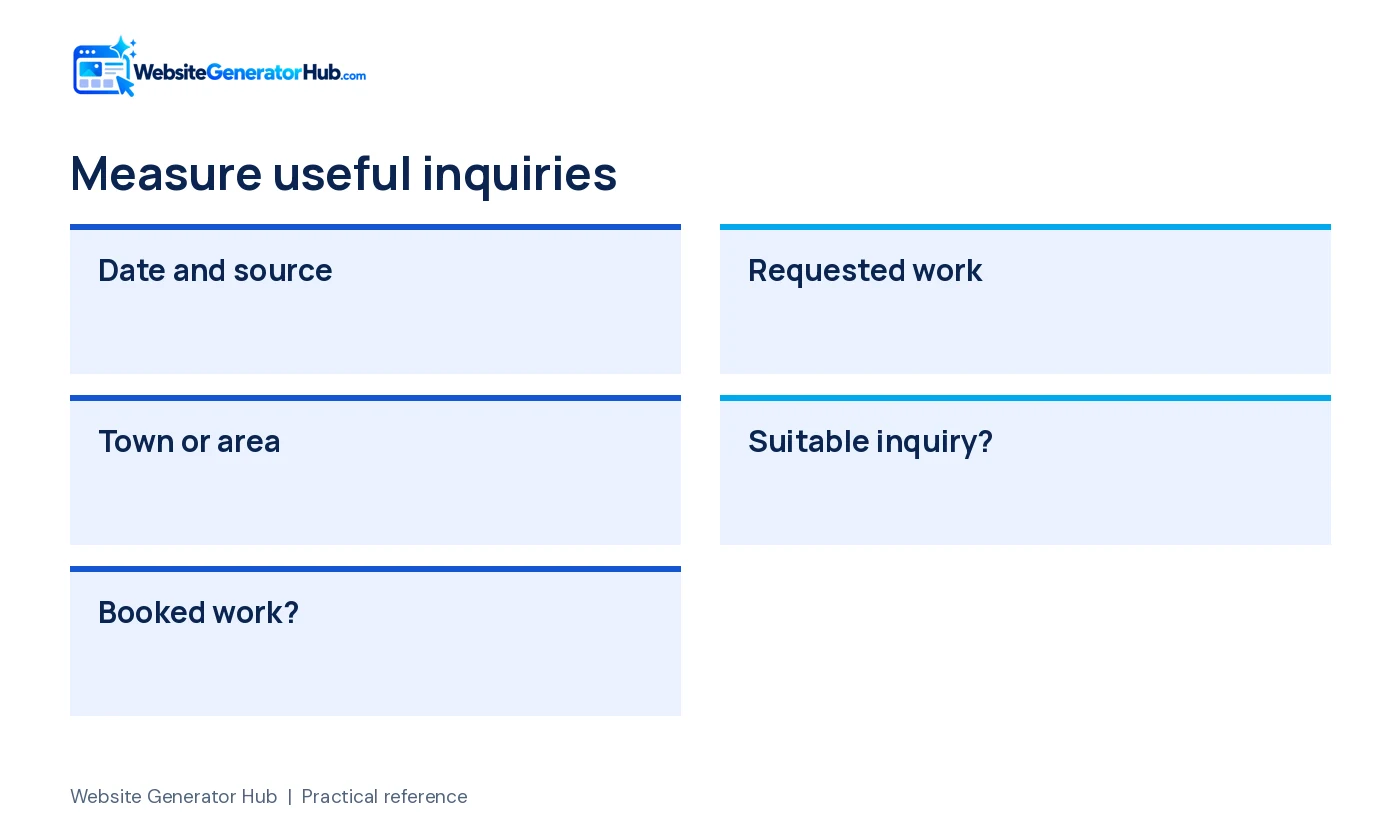
Before paying for extra features, use a short inquiry log. Record the source, job type, town, whether the inquiry was suitable and whether it became work. Do not put sensitive customer details into a shared public spreadsheet. The purpose is to see whether you need better targeting, clearer copy or faster follow-up.
Will a website help with Google and AI search?
A public, useful website gives search systems content to discover and helps people verify information about your business. It does not guarantee rankings, a recommendation or a particular number of leads.
Google's guidance for generative search features keeps the emphasis on foundational SEO. For a small business, the practical work starts with accessible pages, clear descriptions, accurate business information and evidence that supports what you claim.
A visitor should not need to open an image to read your phone number or click through a slideshow to discover your services. Make important information available as normal page text. Give each page a descriptive title. Link related information in a way that makes sense to a customer.
Do not buy a package promising guaranteed ChatGPT recommendations or an automatic first position in Google. Ask what work will actually be delivered and how its effect will be measured. An understandable page and a consistent business presence are useful outcomes even when a search engine changes its layout.
How do you know whether the website is helping?
Look for suitable inquiries and less friction in the sales process. A small number of relevant visitors can be more useful than a large audience outside your working area.
Check the site yourself every month. Open it on a phone, try the main menu, tap the number and submit the form. Read the text as if you had never heard of the business. Would you know what it does and what will happen next?
Use analytics proportionately and explain the tracking you use. A button click is not a completed phone call, and a form submission is not a booked job. Keep those measures separate. When you change something, note the date so you can compare equivalent periods rather than attributing seasonal demand to a new headline.
The website, Google profile and Facebook comparison helps you decide where to spend your next hour. The pre-launch checklist covers the practical checks before you send people to the site.
Frequently asked questions
Is one page enough for a small roofing company?
One page can be enough when the services and customer questions fit comfortably on it. Keep the work, evidence, contact details and next step easy to find. Separate pages become useful when different services need substantial explanations or customers need information for distinct locations or types of work.
Should I wait until I have customer reviews?
You can publish before you have reviews. Use truthful information about your experience, process and services, plus photographs you are entitled to show. Remove demonstration testimonials before launch. Ask genuine customers for honest feedback once work is complete, without writing reviews on their behalf or promising a reward.
Can a Facebook page replace a website?
It can serve as a temporary contact point, particularly if your existing customers use Facebook. A website gives you a more controlled place for detailed information and a stable domain to share elsewhere. Keep the social page if it brings useful conversations, but do not rely on it as your only business record.
Will a free website look unprofessional?
The price alone does not determine how professional a site looks. Clear writing, real photographs, consistent styling and working contact details matter. Check whether the free option places advertising on the page, restricts your domain or requires a paid service for forms before deciding that it fits your business.
Do I need to write a blog immediately?
No. Finish the pages that explain your actual services before committing to regular articles. A neglected blog can become another maintenance task. Add an article when you have a useful answer, project explanation or comparison that helps your customers, rather than publishing general advice merely to increase page count.
What should I do first if my budget is very small?
Check your public business information, gather photographs and write down your main services. Then create a short page with a tested contact method. Save the original files and account details securely. You can add more content and professional help when the business has a clear reason and budget for it.
Start with the smallest website that makes your business clear. Browse the roofing templates, choose a suitable layout and replace the demonstration details with information you can stand behind. A dependable first version gives you something useful to improve.
Sources & further reading
Sources checked .
- Add or claim a Business Profile (opens in a new tab)support.google.com
- Local ranking guidance (opens in a new tab)support.google.com
- Generative search guidance (opens in a new tab)developers.google.com
- Website Generator Hub roofing generator (opens in a new tab)websitegeneratorhub.com
- BrightLocal Consumer Search Behavior: Speed, 2026 (opens in a new tab)www.brightlocal.com